
Summary:
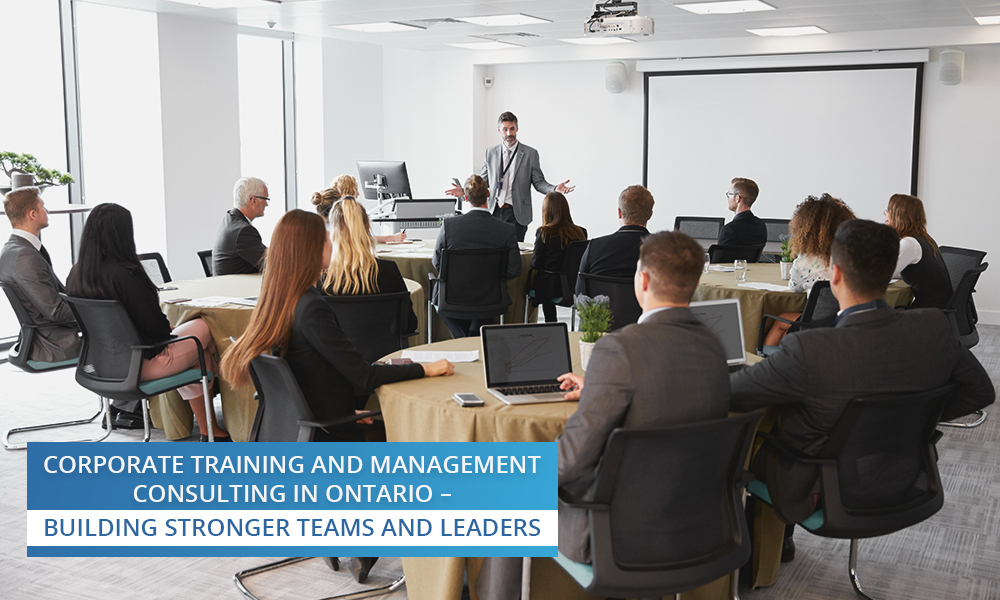
Corporate training and management consulting in Ontario help organizations build stronger teams, develop leaders, and adapt to evolving business challenges. This article explains how integrating training with consulting improves performance, addresses skills gaps, and supports digital transformation. It also highlights key strategies for aligning learning initiatives with long-term organizational goals.
Key Highlights:
- Integrate corporate training and consulting to align skills with business strategy
- Identify skills gaps to deliver targeted training that drives measurable results
- Develop leadership capabilities to strengthen teams and support organizational growth
- Leverage emerging technologies training to support digital transformation initiatives
- Adopt blended learning approaches to improve engagement and knowledge retention
1. What Are the Most Sought After Corporate Training Courses in Ontario Right Now?
Ontario businesses are prioritizing training that strengthens both soft skills and technical expertise. Leadership, communication, and emotional intelligence remain essential for managing hybrid teams and fostering collaboration. In addition, Ontario organizations are increasingly prioritizing emerging technology training. Programs in Artificial Intelligence (AI), Cybersecurity, Information Security, and ISO/IEC certification empower teams to adapt to digital transformation with confidence.
The pandemic also shifted training needs toward resilience, digital fluency, and employee well-being. Courses that address hybrid work, cybersecurity awareness, and mental health support are now seen as vital for long-term organizational success. Through the BEVA® Learning Institute, organizations can access over 700 English & French courses including self-study and e-learning courses that are tailored, flexible, and strategically aligned with business goals.
2. How to Identify Skills Gaps Before Enrolling in Corporate Training Programs
To make the most of your corporate training investment, it’s crucial to pinpoint exactly where your team needs support before enrolling in any program. Start by engaging employees directly through surveys, targeted skills assessments, and performance reviews. These tools empower HR leaders to uncover gaps in core competencies and ensure training aligns with both employee aspirations and business objectives. By zeroing in on the specific skills that drive organizational success, whether that’s leadership, communication, or advanced technical know-how, your company can deliver training that produces measurable results and real value for every team member.
At BEVA®, every training engagement begins with a diagnostic assessment to uncover true skills gaps. This ensures Ontario businesses invest in programs that address their most critical needs, creating lasting improvements in both individual performance and organizational success.
3. Why Ontario Businesses Should Consider Investing in Corporate Training and Management Consulting
Corporate training builds essential skills, but without a strategic framework, those skills may never translate into lasting organizational change. This is where management consulting adds value, by aligning training programs with business objectives, culture, and long-term growth plans. The synergy ensures that your employees are not only learning new skills but also applying them in ways that strengthen your company.
BEVA® bridges this gap by integrating consulting insights into every training program. From leadership development to project management, our approach ensures training is tailored to organizational needs, driving both immediate improvements and sustainable cultural transformation.
4. Key Benefits of Corporate Training for Leadership Development in Ontario
Strong leadership is at the heart of a resilient, forward-thinking organization. Investing in leadership training empowers Ontario managers and executives to inspire their teams, navigate change with confidence, and build a robust pipeline for future leaders. These programs enhance daily operations and play a pivotal role in boosting employee engagement and retention, two critical priorities in today’s competitive landscape.
At BEVA®, our leadership development courses are crafted with your organization’s unique goals in mind. We blend practical, hands-on learning with strategic insights, ensuring your leaders are ready for today’s challenges as well as prepared to drive innovation, encourage collaboration, and support your growth well into the future. Whether you’re looking to strengthen team performance or build a culture of continuous improvement, our tailored approach helps your leaders and your business thrive.
5. How Emerging Technologies Are Shaping the Future of Corporate Training in Ontario
Technologies such as Artificial Intelligence (AI), automation, cybersecurity tools, and cloud-based platforms are transforming how organizations operate. As these tools become more integrated into day-to-day workflows, employees must be equipped with the knowledge and confidence to use them effectively. This shift places corporate training at the centre of digital transformation.
At BEVA®, programs in emerging technologies help organizations prepare their teams for emerging digital demands. These courses go beyond basic technical instruction, they build the analytical thinking, adaptability, and innovation skills needed to thrive in a modern workplace. By embracing emerging technologies through structured training, Ontario businesses strengthen their resilience and prepare their teams for the future of work.
6. The Importance of a Learning Advisor to Design Effective Corporate Training Courses
Effective training starts with understanding the bigger picture. Management consultants play a key role by assessing organizational gaps, aligning training with business goals, and guiding implementation. This ensures training isn’t just about individual skill development but about strengthening the entire organization.
BEVA’s consulting-led approach follows a clear process: assessment → strategy → implementation. By integrating consulting insights into program design, we help Ontario businesses create training initiatives that are targeted, strategic, and sustainable.
7. How Corporate Training Courses Can Improve Team Collaboration and Communication
Strong collaboration and clear communication are essential for productivity, especially in today’s hybrid workplaces. To help employees work together more effectively and reduce conflict, your training programs must include role-playing, team-building exercises, and strategies for fostering psychological safety. Imparting these skills as part of employee training programs will directly translate into stronger, more cohesive teams.
At BEVA®, our approach emphasizes practical techniques that improve communication and collaboration across all levels of an organization. By addressing both interpersonal dynamics and hybrid work challenges, we help Ontario businesses build high-performing teams that are adaptable and engaged.
8. How AI Is Transforming Project Management for Modern Organizations
Artificial Intelligence (AI) is transforming project management by helping teams work smarter, faster, and with greater accuracy. For Ontario organizations navigating complex workflows and hybrid work environments, AI offers valuable support by automating repetitive tasks, analyzing project data, and identifying risks early. Rather than replacing project leaders, AI strengthens their decision-making by providing predictive insights into potential delays, resource constraints, and budget issues. It also enhances planning by generating more accurate schedules and offering clear, real-time visibility into project health.
By reducing administrative workload and improving access to actionable insights, AI allows project managers to focus on strategy, communication, and team leadership. BEVA® supports this transition through AI-focused training and consulting services designed to help teams adopt the right tools with confidence. With AI in place, Ontario businesses can achieve more consistent project outcomes and build teams that are prepared for the rapidly evolving future of work.
9. Why Blended Learning (Virtual + In-Person) Is the Future of Corporate Training in Ontario
Blended learning combines the flexibility of virtual training with the engagement of in-person sessions, making it a cost-effective and scalable solution for Ontario businesses. This model allows your employees to learn at their own pace while still benefiting from hands-on practice, group discussions, and direct interaction with instructors.
BEVA® delivers bilingual training in-person, virtual, or through hybrid formats, giving you the flexibility to choose what works best for your teams. This approach ensures maximum accessibility and engagement, helping your business build skills that stick and employees that stay.
10. Virtual Learning vs. E-Learning: Understanding the Best Training Format for Your Workforce
With more organizations embracing flexible work, choosing the right training format is essential for keeping employees engaged and ensuring strong learning outcomes. Virtual learning, e-learning, and self-study each offer unique advantages depending on the training goals and learner preferences. Virtual learning delivers live, instructor-led sessions that encourage real-time discussion, role-plays, and collaboration, making it ideal for leadership development and communication-based programs. E-learning provides interactive, multimedia-rich modules that learners can complete at their own pace, offering flexibility for technical topics, onboarding, and large groups. Self-study, meanwhile, gives individuals full independence with reading-based content, making it a strong option for certification preparation or reflective learners.
Selecting the right format depends on the specific needs of your team. BEVA® supports all three formats and often recommends a blended approach that combines the strengths of each method. By choosing the format that aligns with your objectives, organizations can boost engagement, improve knowledge retention, and ensure training investments deliver measurable results.
Investing in People Today to Secure Tomorrow’s Success
In today’s fast-changing business environment, Ontario organizations cannot afford to treat corporate training and management consulting as separate initiatives. Training develops the critical skills employees and leaders need, while consulting ensures those skills are aligned with strategy and embedded into organizational culture. When combined, they create stronger teams, resilient leaders, and workplaces equipped to thrive in the face of change.
From identifying skills gaps to designing tailored programs, BEVA® brings over 25 years of expertise to help organizations achieve measurable results. With more than 700 courses, accredited certifications, and a consulting team of seasoned industry professionals, BEVA® delivers solutions that go beyond skill development, fostering cultural transformation and sustainable growth.
Ready to strengthen your teams and leaders?
Partner with BEVA® and discover how tailored corporate training and management consulting can transform your organization.
Contact us today to start building stronger teams and future-ready leaders in Ontario.
Frequently Asked Questions:
- What is the difference between corporate training and management consulting?
Corporate training focuses on developing employee skills through structured learning programs, while management consulting provides strategic guidance to align those skills with business objectives. When combined, they ensure that learning initiatives lead to measurable improvements in performance and organizational outcomes.
- Why should organizations combine training with consulting?
Combining training with consulting ensures that employee development is aligned with organizational strategy. Consulting helps identify skills gaps and business needs, while training equips employees with the tools to address them, resulting in more effective and sustainable performance improvements.
- How do you identify skills gaps in an organization?
Skills gaps can be identified through employee assessments, performance reviews, and feedback surveys. These methods help organizations understand current capabilities and determine where additional training is needed to meet business objectives and improve overall performance.
- What role does technology play in corporate training today?
Technology plays a critical role by enabling flexible, scalable, and interactive learning experiences. Tools such as e-learning platforms, virtual training, and AI-driven insights help organizations deliver relevant training while supporting digital transformation and continuous skill development.
- What is blended learning and why is it effective?
Blended learning combines virtual and in-person training methods to enhance flexibility and engagement. It allows employees to learn at their own pace while still benefiting from interactive sessions, leading to better knowledge retention and improved application of skills in the workplace.
About the Author:
Richard is the President & CEO of BEVA® Global Management, bringing decades of experience evolving from a Senior Project Manager overseeing large, complex initiatives to leading an internationally connected consulting and training organization. He specializes in building strong business relationships at the local, national, and global levels while ensuring client satisfaction through rigorous quality assurance practices.
A bilingual (English/French) communicator and skilled facilitator, Richard is known for his collaborative approach, attention to detail, and emphasis on structured documentation. He is responsible for delivering highly regarded project management and soft skills training to government departments, agencies, and private sector organizations.
Richard holds a Master of Science in Project Management (M.Sc.PM.) from the Université du Québec en Outaouais and has completed doctoral-level studies. He is a certified PMP®, MPM™, and CIPM™, with expertise spanning stakeholder engagement, PMO development, business process management, organizational capacity building and an avid user of AI.
About the Author
As a Master Degree in Science in Project Management from the University of Québec , Richard is a dynamic bilingual professional with more than 25 years of progressively senior leadership experience in various industry sectors such as retail, construction, non-profit organizations, research and development, information technology and government. Richard holds various designation such as Project Management Professional (PMP), Certified International Project Manager (CIPM), Certified Master Project Manager (MPM) and Information Technology Infrastructure Library (ITIL). Richard is also known as a reputable and knowledgeable instructor in project management in both English and in French in class and virtual.